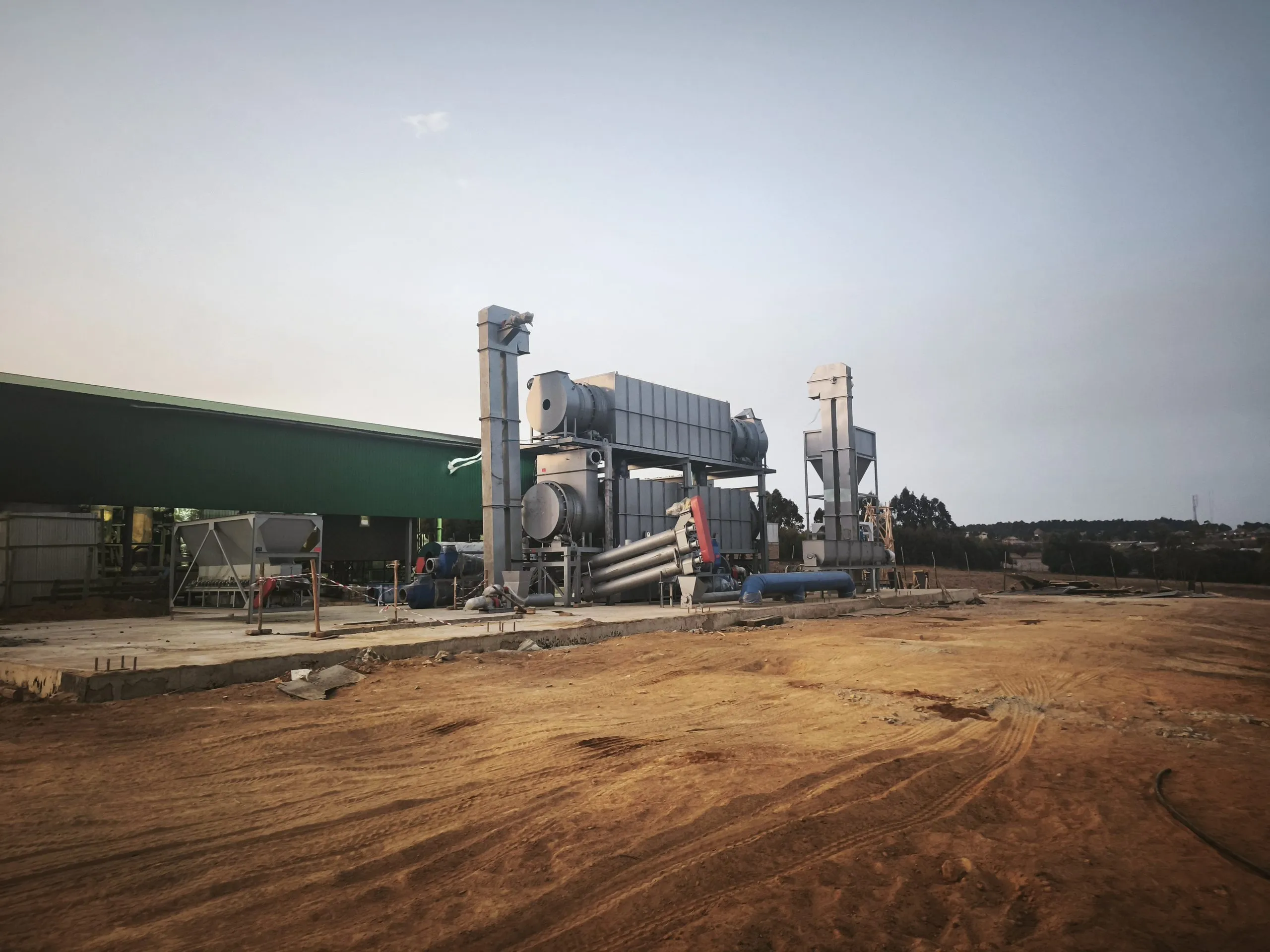
Operation and maintenance
Recurring cover for a plant that has to keep running: preventive maintenance, breakdown response, spares planning and operator competence as staff turn over.
O&M contracts
Field engineering · O&M · Biochar agronomy
Dark Earth Carbon installs and commissions biochar plants inAfrica, recovers the ones that underperform, and holds the contracts that keep them running. Projects in Kenya and Tanzania. We run our own production too — biochar and durable carbon removal — and most of what we know came out of operating it.
Most of the money and attention goes into getting a plant built. The problems that decide whether it earns anything come later.
Equipment gets specified for conditions it will never see, then fed whatever moisture and particle size the season delivers. Blocked augers, worn seals, combustion that won't hold steady; and a commissioning period that keeps extending, because every diagnosis needs someone flown in. Availability settles well below what the business case assumed, and usually stays there.
A kiln produces a bulk material. A distributor stocks a product: application rate, pack size, a price that survives the channel, evidence their own agronomist accepts. Getting from one to the other is a separate job.
A plant that doesn't run has nothing to sell and nothing to certify. A plant that runs but can't move its biochar ends up underused, living on carbon revenue alone.
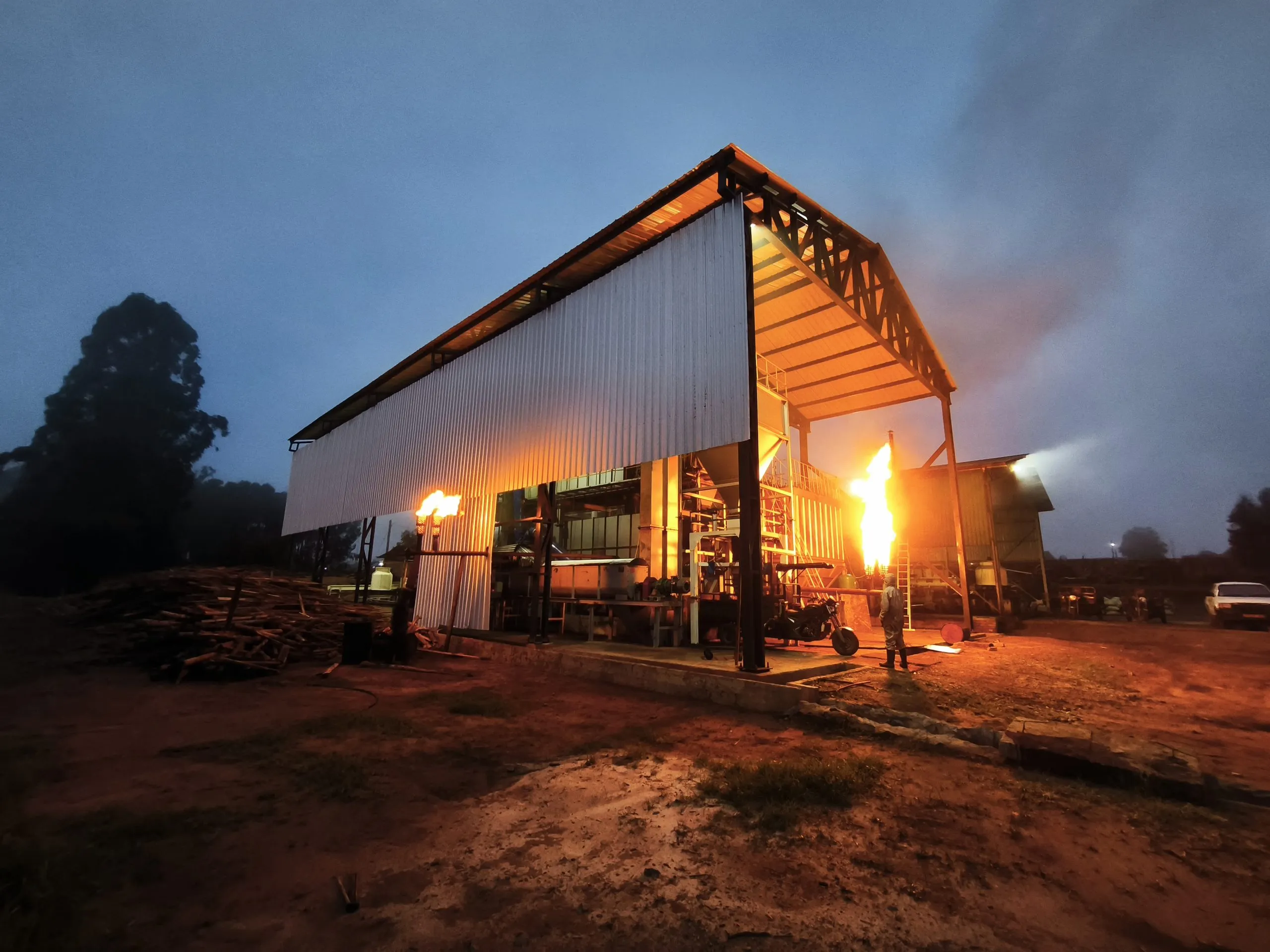
Every project we are called to comes down to the same idea: heat biomass without letting it burn. The arrangement we see most is a screw carrying material through a heated tube. Doing that steadily, in a rural yard, on whatever the season supplies, is another matter.
Crop residues, husks, prunings. Left where they fall, this material burns in the open or rots, and its carbon is back in the atmosphere inside a season or two.
Heat on the outside, air kept out, material moving slowly along. Starved of oxygen it cannot burn; it decomposes instead. Doing that steadily, on feedstock whose moisture and particle size change from one load to the next, is the hard part.
Moisture and volatile compounds are driven off as vapour, drawn out through an offtake in the tube, and in most designs burned back into the process, so the gas leaving the reactor is also part of what keeps it hot. Meanwhile the solid shrinks. It has lost that mass to the gas.
A porous carbon skeleton, discharged and cooled at the outlet. Its carbon will now resist decomposition for centuries — the same centuries over which the residue it was made from would have rotted away. One property, two uses. It does work in the soil, and it can be counted as removal.
Which one you need depends on whether the trouble is the plant or what comes off it.
Recurring cover for a plant that has to keep running: preventive maintenance, breakdown response, spares planning and operator competence as staff turn over.
O&M contractsNew installations brought into service, and existing plants that have never reached their numbers measured, diagnosed and recovered.
Engineering workTurning bulk biochar into a specified agricultural product: characterisation, formulation, field trials and the channel that will carry it.
Product developmentIn Kenya and Tanzania, where the plants are. Nobody has to be flown in to look at a fault.
A plant handed over at commissioning tends to drift. So we stay: maintenance, operator training, spares, and the slow improvements you only find by running the same equipment for years.
We characterise the biochar, formulate it for particular crops and soils, and trial it in the field before it goes anywhere near a sales channel. Repeat purchase is how we judge whether that worked.
If we have not measured it, we will not put a number on it. You get the reasoning and the uncertainty with the answer, plus what it would take to close the gap.
Mostly organisations running several facilities, or moving real volume, without their own engineering and agronomy people on the ground inAfrica.
Dark Earth Carbon produces biochar and durable carbon removal itself, and both are for sale. They are also why the engineering advice is worth anything: we carry the consequences of it on our own ground first.
Characterised biochar for soil application and blending, with a specification tied to the batch and guidance on how to apply it.
Biochar supplyDurable CO₂ removal from our own production, documented end to end and traceable back to a named run.
Carbon removalNotes on pyrolysis, plant performance and what to ask an equipment vendor. Written for the people who have to run the thing.
Engineering, O&M, agronomy, biochar and carbon removal all arrive in the same inbox. The contact page sets out what is worth including for each.