Characterisation
Material properties for the batch you're buying, tied to the production run it came from. Feedstock and process both move the numbers, so the specification is issued per run.

Biochar varies a lot with feedstock and process, and two loads that look the same can behave differently in soil. Ours comes with the characterisation and the application guidance you need to use it properly, because we run the process it comes out of.
Biochar is what you get when you heat biomass in a low-oxygen environment. That process is pyrolysis. Left to decompose, the same biomass would return most of its carbon to the atmosphere within a few years; pyrolysis converts part of it instead into a porous, stable carbon that resists breakdown in soil for centuries. That persistence is what makes the material useful twice over, as a soil amendment and as a durable form of carbon removal.
(How the process works, and why two biochars from the same feedstock can behave very differently.)
The idea is simple enough to draw: heat biomass without letting it burn. What follows is a screw reactor, drawn stage by stage. The temperatures and residence times shown here are what set the properties of everything described above.
Crop residues, husks, prunings. Left where they fall, this material burns in the open or rots, and its carbon is back in the atmosphere inside a season or two.
Heat on the outside, air kept out, material moving slowly along. Starved of oxygen it cannot burn; it decomposes instead. Doing that steadily, on feedstock whose moisture and particle size change from one load to the next, is the hard part.
Moisture and volatile compounds are driven off as vapour, drawn out through an offtake in the tube, and in most designs burned back into the process, so the gas leaving the reactor is also part of what keeps it hot. Meanwhile the solid shrinks. It has lost that mass to the gas.
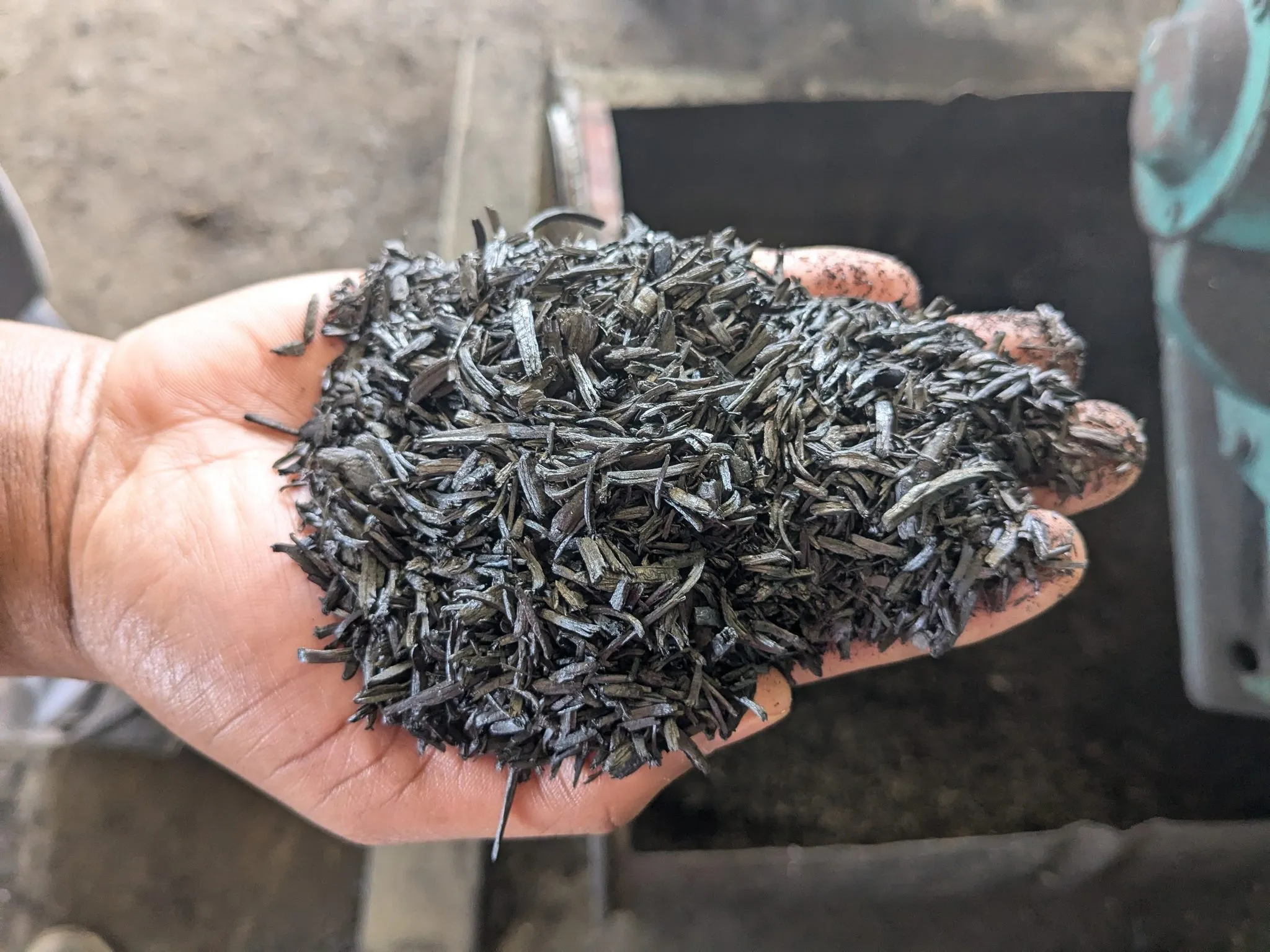
A porous carbon skeleton, discharged and cooled at the outlet. Its carbon will now resist decomposition for centuries — the same centuries over which the residue it was made from would have rotted away. One property, two uses. It does work in the soil, and it can be counted as removal.
The pore structure gives biochar a high internal surface area. In the right soil, at the right rate, that supports:
Those are the mechanisms. How much difference they make depends on your soil, your crop, what you are already doing and the rate you apply, so we won't quote you a yield figure over email. Tell us about your situation and we'll tell you what the trial data supports. We have written at more length onwhere we think the evidence ends.
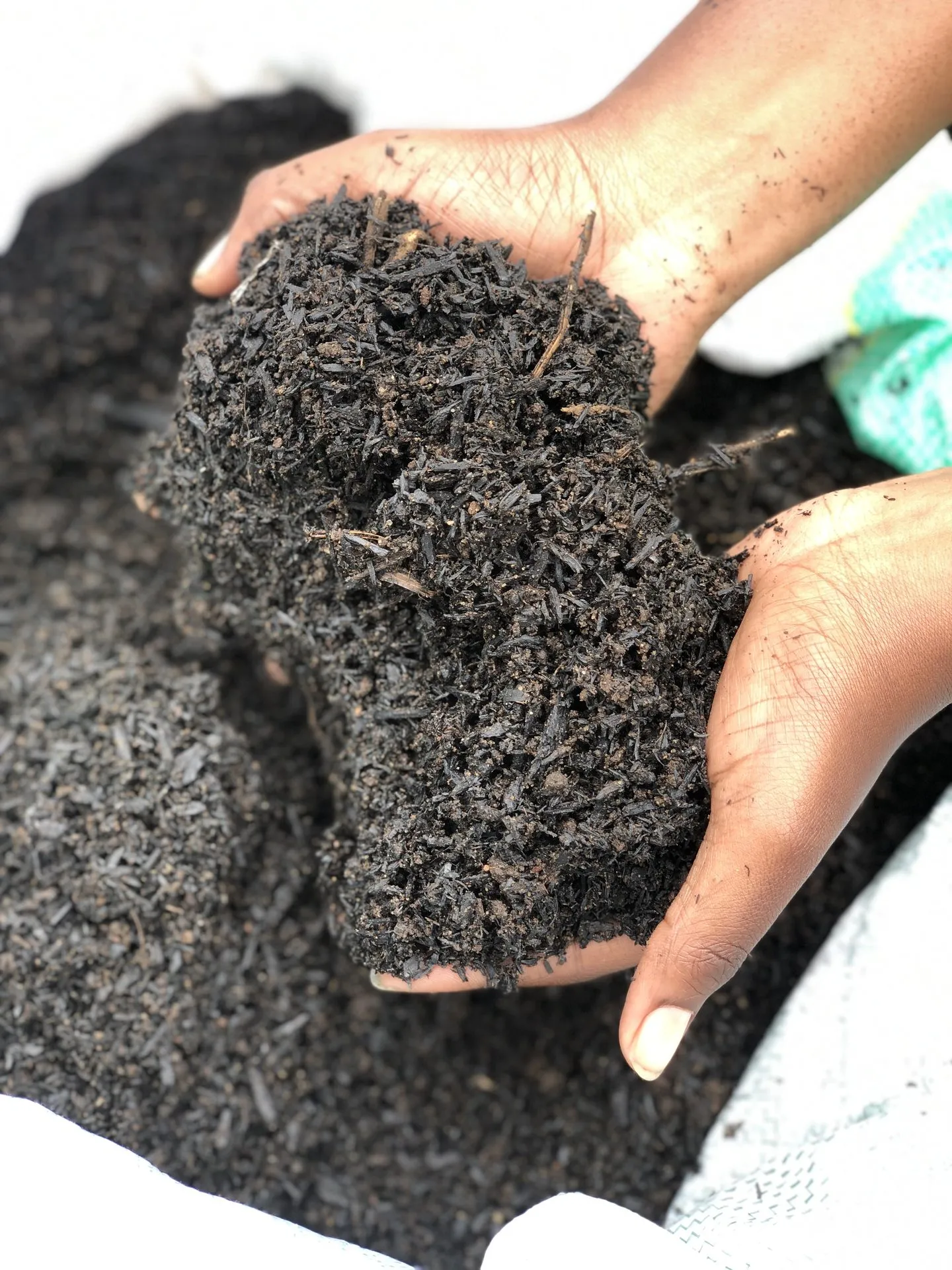
Straight from the kiln, biochar can tie up nitrogen for a while. Its surfaces are empty, so they adsorb nutrients before they begin releasing them, and a good number of disappointing first trials come down to that alone.
Charging loads those surfaces before the material reaches the field: composting, blending with manures, or combining it with nutrients or biological inputs. We can supply raw biochar to anyone with their own blending capability, or work up a formulation for your crop and soil if that is easier.
Material properties for the batch you're buying, tied to the production run it came from. Feedstock and process both move the numbers, so the specification is issued per run.
Rates, timing and method for your crop and soil. How to charge or blend it before it goes out, and where it fits alongside the fertiliser you're already applying.
Where you need a finished product: blending, curing, pelletising and granulation protocols, plus the quality control to keep it consistent batch to batch.
For a distributor, agrodealer or input company, supply is the easy part. A product that moves needs pack sizes that fit how farmers buy, a margin structure that survives the channel, evidence your own agronomists will sign off on, and counter staff who can explain it to someone who has never used it.
We do that work for other producers as well as for ourselves. It sits under agronomy and route to market.
Crop, soil, rough volume, and where it has to get to.