
Named after a soil that has held its carbon for centuries
In the Amazon basin there are patches of dark, unusually fertile soil sitting in the middle of some of the most weathered and nutrient-poor ground anywhere. They're called terra preta, dark earth. People made them, centuries ago, by working charcoal into the ground. They're still fertile.
Running plants in difficult places
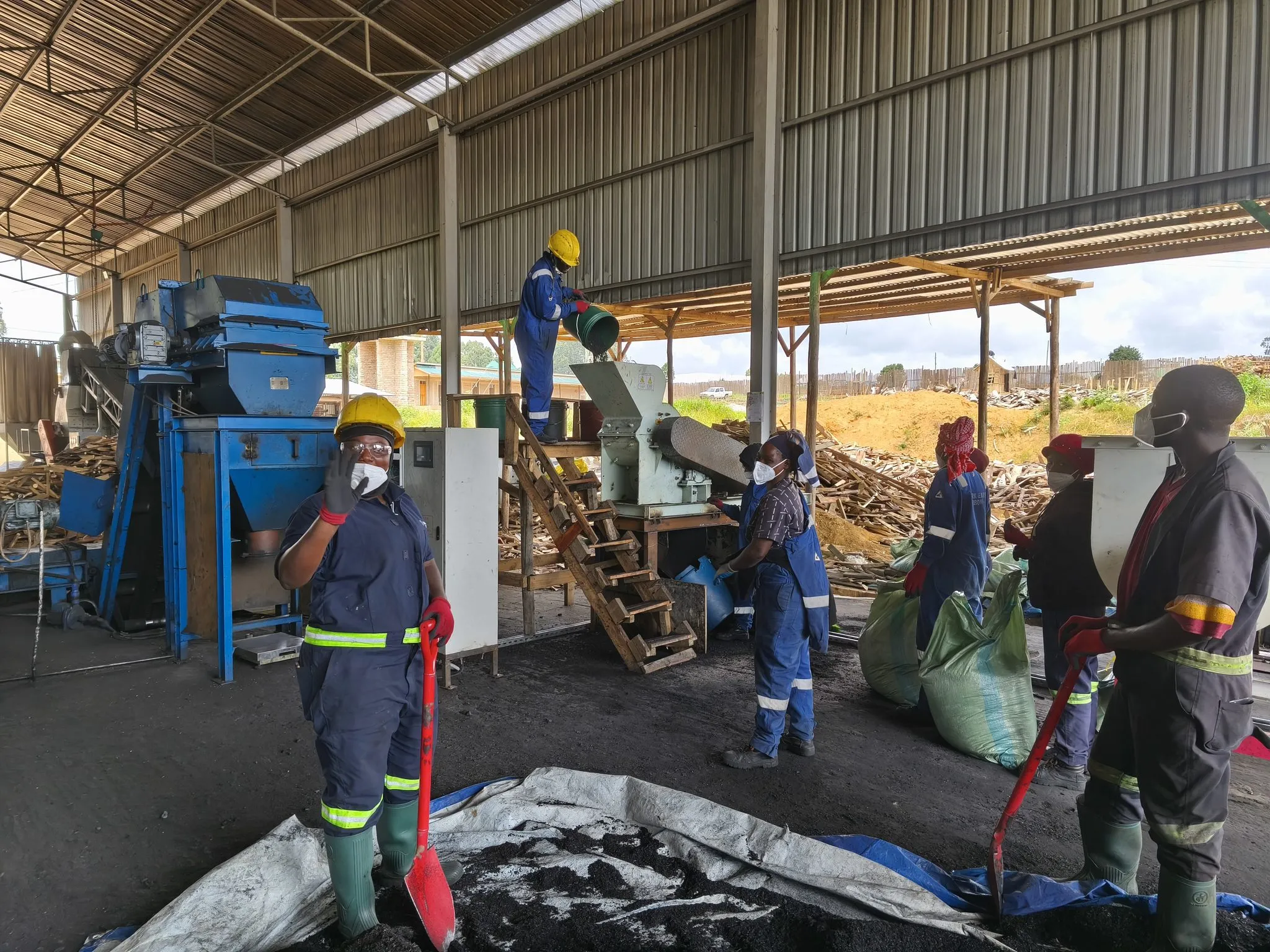
The chemistry of biochar has been well understood for a long time. The work is in running a pyrolysis plant reliably three hours down a bad road, on whatever feedstock is available that month, staffed by people who have to be able to fix it themselves. And then in getting a farmer to pay for the black material in the bag a second season running, on evidence that stands up.
That's our work. Most of it is done on other operators' facilities: commissioning their plants, recovering the ones that underperform, and holding the maintenance afterwards. Alongside that sits the agronomy work that decides whether any of it sells: formulation, trial evidence, distribution. We run our own production as well, which is where most of this was learned and where the mistakes were cheaper.
Where we work
Africa, for now, with projects in Kenya and Tanzania. Our engineers live there, because a plant that is down waits for whoever can get to it.
It shapes what we build, too. Equipment that needs a specialist flown in spends a lot of its life switched off.
How we talk about results
This sector has a habit of getting ahead of its evidence, and biochar attracts claims field data doesn't support. Our rule is that agronomic claims come from trial data on comparable soils and crops, and equipment claims come from field measurement against defined benchmarks.
Where the evidence isn't there yet we say so. That includes our own machine programme, still in development, which goes into one of our sites for validation before it goes anywhere else.
Part of Masika Ventures
Dark Earth Carbon is a Masika Ventures company.
Come and see it
We would rather walk someone round a site than describe one. If you are working on biochar anywhere in Africa, that offer is open.