Operation and maintenance
Recurring cover for a plant that has to keep running: preventive maintenance, breakdown response, spares planning and operator competence as staff turn over.
O&M contracts
Most biochar operations are held back by a plant that won't run properly, by output nobody will buy, or by both at once. We work across the chain, from feedstock intake to the point of sale.
Customers usually arrive through one of these and end up needing another; a plant that has just been recovered still has to be kept running.
Recurring cover for a plant that has to keep running: preventive maintenance, breakdown response, spares planning and operator competence as staff turn over.
O&M contractsNew installations brought into service, and existing plants that have never reached their numbers measured, diagnosed and recovered.
Engineering workTurning bulk biochar into a specified agricultural product: characterisation, formulation, field trials and the channel that will carry it.
Product development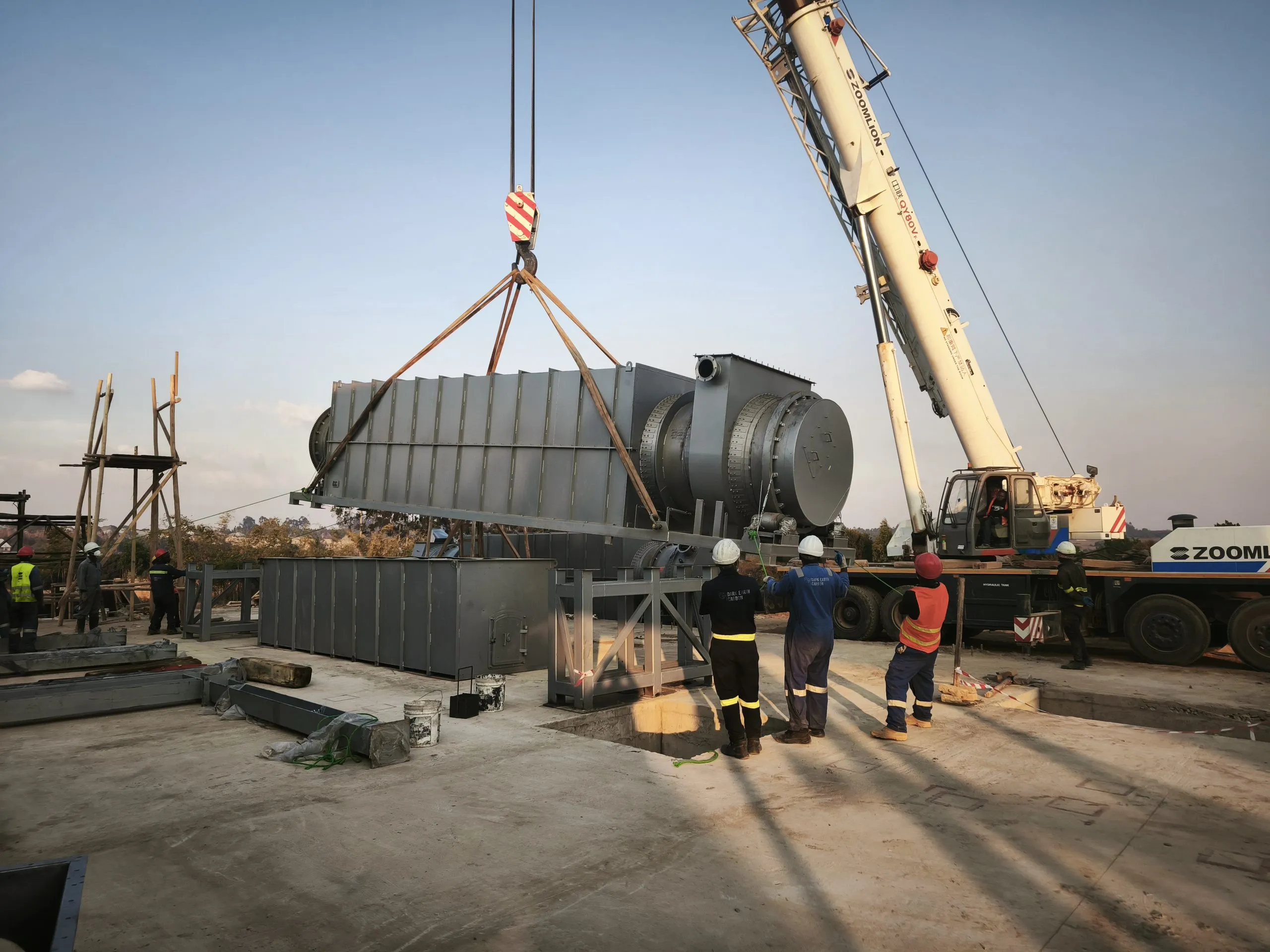
Our focus is Africa, with projects inKenya and Tanzania, and our engineers live there.
We also stay on after commissioning instead of handing over and leaving. Performance drifts when nobody is responsible for it, and most of what we know about this equipment came from running the same machines through several seasons.
We also produce biochar andcarbon removal ourselves, on sites where we carry the cost of getting it wrong.
Plant availability, char yield, quality consistency, formulation, agronomic evidence, distribution economics. Usually more than one at once, so the diagnosis comes before the quote.
A defined piece of work with a result you can measure: a plant recovered, a facility commissioned, a formulation developed and trialled.
Most of this work has a natural continuation: maintenance, agronomic backup, channel development. We will usually want it, because performance holds when someone stays responsible for it. It is never a condition of the first engagement.
We're developing a pyrolysis machine with specialist engineering partners, designed around rural operating conditions. The brief came out of repairing other people's equipment: controls a trained local operator can read, faults diagnosable on site, wear parts that are reachable and can be made in a regional workshop, and modules sized for the trucks and lifting gear that exist near the site. It has to take unreliable power, dust, heat and bad roads as ordinary conditions.
Status: in development. The first unit goes into one of our own sites for validation before it's offered to anyone else, so the prototype risk sits with us. We won't publish throughput, yield or comparison figures until they have been measured in the field against defined benchmarks.
Send us what the equipment is and what it is doing.