
Getting the plant to work
Whether it is a new installation or a plant that has never hit its numbers, the work starts the same way. Measure, find the constraint that is actually binding, fix that. Then train the crew who will be there after we leave.
What the work covers
- Technical diagnostics and performance recovery on underperforming facilities
- Process and mechanical troubleshooting: material flow, feeders, augers, seals, discharge, heat transfer and combustion stability
- Deployment planning, installation and commissioning
- Operator training and written operating procedures
- Performance monitoring after handover, and the changes that come out of it
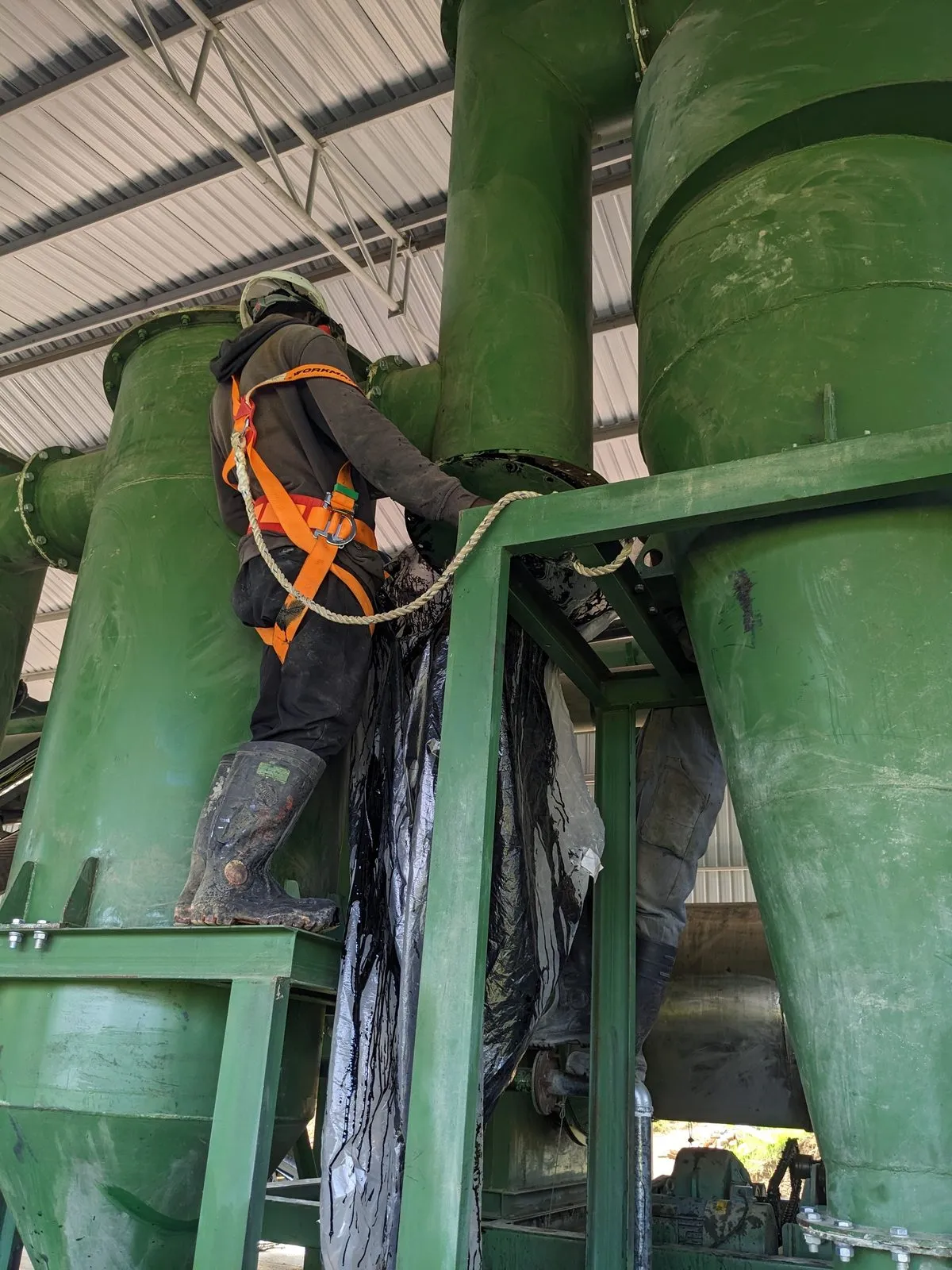
Recovery work starts with measurement: throughput, feedstock moisture, process temperatures and downtime, all logged before anything is changed.
The constraint is rarely the one the site has settled on
By the time we are called, most sites have a theory. It has usually been held for a while and it is usually about temperature. Low char yield with a perfectly correct temperature reading is more often a vapour-handling problem: pull the vapours out of the hot zone the moment they form and carbon that should have been deposited back onto the char leaves as gas and oil instead.
The reason these theories survive is that almost no underperforming plant is instrumented well enough to test them. Measuring feedstock moisture, mass in, mass out and temperature at more than one point resolves a surprising proportion of cases before anyone opens a reactor.
Two notes go into more detail:the failure modes we see most often, by symptom, andwhat actually controls char yield.
Buying a plant, or specifying one
We have no stake in which vendor you choose — we do not sell pyrolysis equipment — so we are a reasonable party to have in the room while you decide. Most of the value we add at this stage is in the acceptance criteria, and in reading a specification for what it quietly leaves out.
Our checklist ofwhat to ask before you buyis published in full, including the acceptance criteria worth getting into the contract. Take it to a vendor meeting whether or not you talk to us.
After recovery
A recovered plant drifts back if nobody stays responsible for it. Most of this work continues naturally intoan O&M contract, though that is never a condition of the first engagement.
Before anyone opens a reactor
Throughput, feedstock moisture, and temperature at more than one point. If you already have those numbers, send them. If you do not, getting them is usually the first piece of work.