
Technical note
Why biochar plants underperform
The failure modes we see most often in the field — symptom, likely cause, and what to check first.
For operators and owners of plants that are running, but not the way the specification said they would.
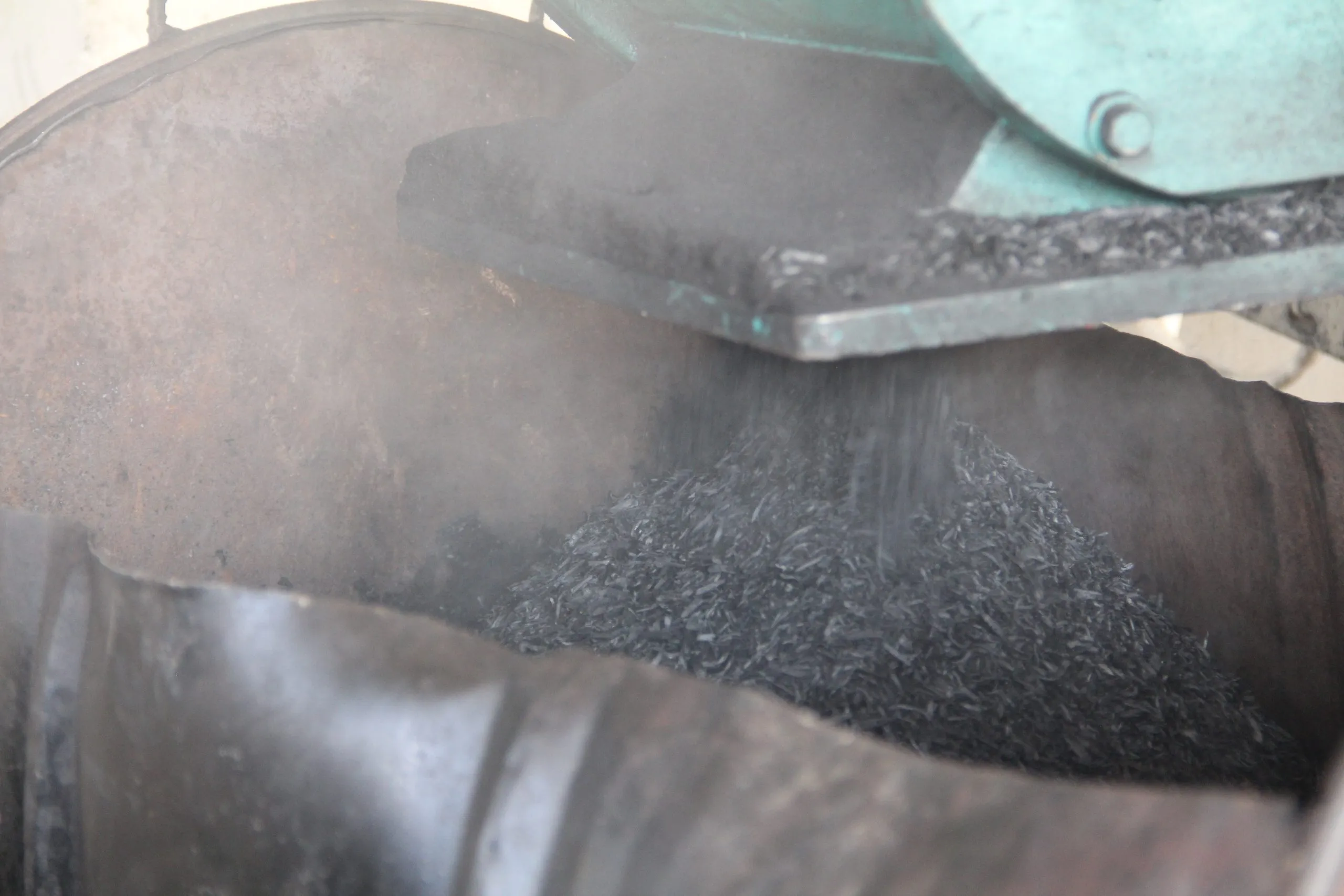
A plant that has been commissioned and handed over is not the same as a plant that works. Most of the facilities we get called to are running. They are running at a fraction of what they should, and have usually been doing it long enough that everyone on site has stopped noticing.
This is arranged by symptom, because that is how the problem arrives.
Char yield is below specification
The most common complaint, and the one most often misdiagnosed as a temperature problem.
Look at vapour handling first
If vapours are pulled out of the hot zone the moment they form, carbon that should have been deposited back onto the char leaves as gas and oil instead. Over-aggressive extraction, excessive sweep gas, or a bed too shallow for vapours to percolate through will all cost you yield with the temperature reading perfectly correct.The mechanism is explained here.
Then feedstock moisture
Wet feed absorbs energy that should be driving pyrolysis. On a plant near its thermal limit it drags the reaction zone down into the torrefaction range, and what comes out is partially converted material that looks dark and is not char.
Then particle size
Fine material gives the vapours nowhere to go but the free gas space, so no secondary char forms. It also packs, which changes gas flow through the bed.
Output is inconsistent between batches
Almost always feedstock variability rather than equipment. Species mix, moisture, particle size and contamination all move together on a real supply chain, and the plant is the thing that reveals it.
The failure underneath is usually procurement: feedstock bought on delivered price with no specification. A moisture threshold and a size specification at the weighbridge will do more for consistency than anything done inside the reactor.
Quality varies within a single batch
Uneven heat distribution, or mixed particle size. Part of the charge reaches peak temperature while part is merely torrefied, and the blended output meets no specification at all.
Sites almost always sample from one convenient point. Sample from several points across the discharge and the variation usually becomes obvious immediately.
Throughput never reaches the rating
Check what the rating referred to before assuming a fault. A peak instantaneous figure on dry, sized, uniform feedstock is not an operating rate.
Where there is a genuine restriction, it is usually one of:
- Feed system. Augers slipping, bridging in the hopper, inconsistent bulk density.
- Discharge. Char removal limiting the rate at which material can move through.
- Heat input. The reactor cannot supply energy fast enough at the moisture being fed to it.
- Cooling. Char leaving too hot to handle or store safely, so the whole line waits on it.
Constant blockages in feed and discharge
Material flow is where most mechanical downtime originates, and it is systematically underestimated at design stage because it is tested on ideal material.
- Bridging in hoppers. Fibrous or damp material arching over the outlet.
- Auger wear. Flights thinning against abrasive, high-ash feedstock until conveying becomes intermittent.
- Seal failure. Air leaking into a zone that has to stay oxygen-free, causing partial combustion and lost yield.
- Contamination. Stones and metal from field-collected residues, which arrive eventually whatever the supply agreement says.
Persistent tar fouling
Condensable vapours are reaching surfaces cool enough to condense on before they are burned. The result is fouled gas paths, blocked heat exchangers, fire risk and a maintenance burden that grows until someone redesigns the gas path.
Scheduled cleaning treats the symptom. The question to ask is why the vapours are not being combusted: usually insufficient temperature in the combustion zone, poor mixing, or too little residence time for complete burnout.
The plant cannot sustain its own heat
A well-designed unit burns its own pyrolysis gases to drive the reaction. If it needs continuous external fuel, either the feedstock is too wet for the design, or the combustible gases are not being captured and burned effectively. Either way it shows up twice, in operating cost and in the emissions figures underpinning any carbon claim.
Visible smoke
Smoke is unburned product leaving the site. It is a yield loss, an emissions problem, a community-relations problem and, where carbon is being claimed, a documentation problem. Treat it as a process fault, not a nuisance.
Gaps in the operating record
For a facility generating carbon revenue, a monitoring gap can cost as much as a mechanical failure. Production that was not logged may not be claimable at all.
Common causes: instrumentation specified for process control rather than carbon documentation, logging dependent on connectivity that rural sites do not reliably have, and no local buffering when the link drops.
The failures that are not mechanical
A good share of what we get called in for has nothing wrong with the equipment at all.
Dependence on a distant OEM
Where every diagnosis needs a visit from overseas, the queue for attention becomes the binding constraint on availability, ahead of anything mechanical. Worth costing honestly: the downtime belongs in the total, not just the invoice for the visit.
Operator turnover with no training system
Plants are commissioned with one trained crew and no mechanism for the second. Eighteen months later nobody on site was present at handover, procedures exist only as habit, and performance has drifted without a single component failing.
Procedures that do not exist in writing
Or exist in a language the operators do not read, or describe a machine that has since been modified.
Spares held for the wrong parts
Sites hold what the vendor supplied, which is seldom what fails. Wear parts run out; unused assemblies sit in the store for years.
Equipment specified on purchase price
The root cause behind much of the above. A machine chosen on capital cost rather than lifecycle cost arrives with imported wear parts, unfamiliar controls and no local support, and takes the saving back over the following decade with interest.We wrote a checklist for avoiding this.
How to approach it
Two things hold on nearly every recovery job we do. The constraint is rarely the one the site has already settled on. And nobody finds the real one without measuring, because most underperforming plants are not instrumented well enough to show where the loss is happening. That is how the same theory survives on a site for years without ever being tested.
Start by measuring feedstock moisture, mass in, mass out, and temperature at more than one point. That alone resolves a surprising proportion of cases before anyone opens a reactor.
These are the patterns we encounter most often across the facilities we work on. They are not a diagnosis of any particular plant, and an unfamiliar site can always be failing for a reason that is not on this list.